- Client
- Dad.Live
- Platform
- Custom platform (Node.js)
- Industry
- Family Legacy Platform
- Scope
- Full build from scratch
- Live site
- dad.live
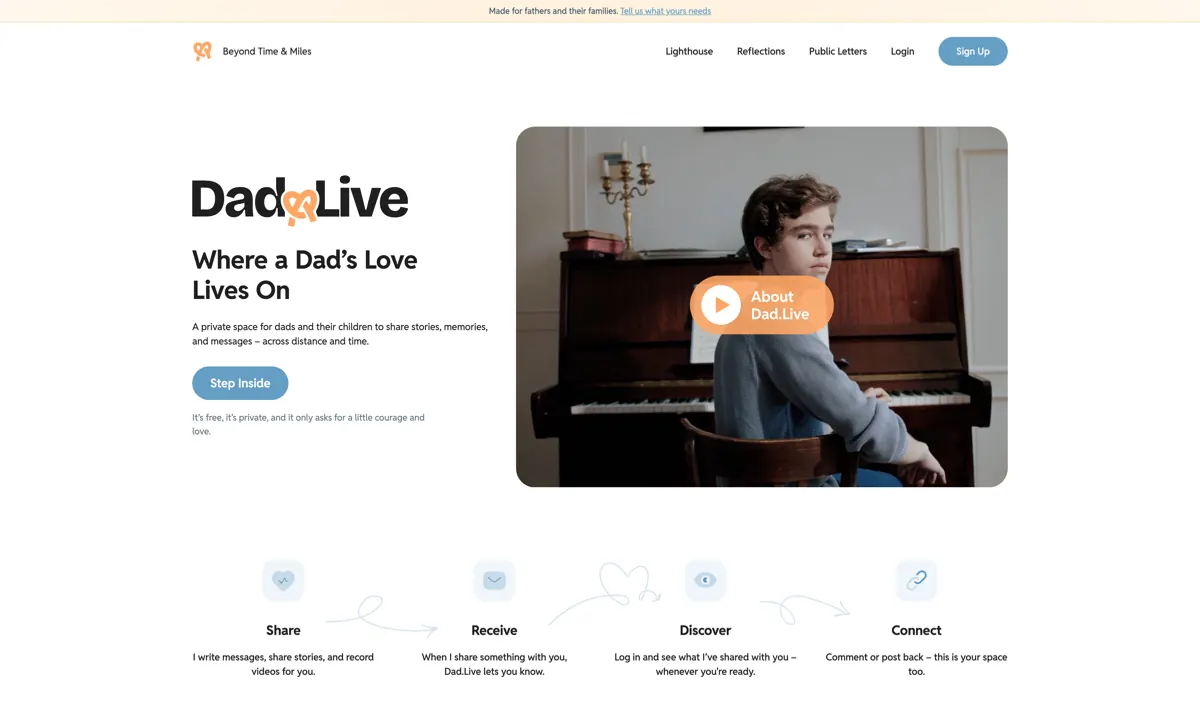
Dad.Live exists for a reason most software doesn't touch: distance and time. Fathers write letters, record voice notes and video messages; children read and watch them now, or years from now — privately, within the family, or shared publicly. We built the entire platform from scratch: the logic flows, the sharing model, the discovery engine and the performance work underneath.
The Challenge: Software for Decades, Not Sessions
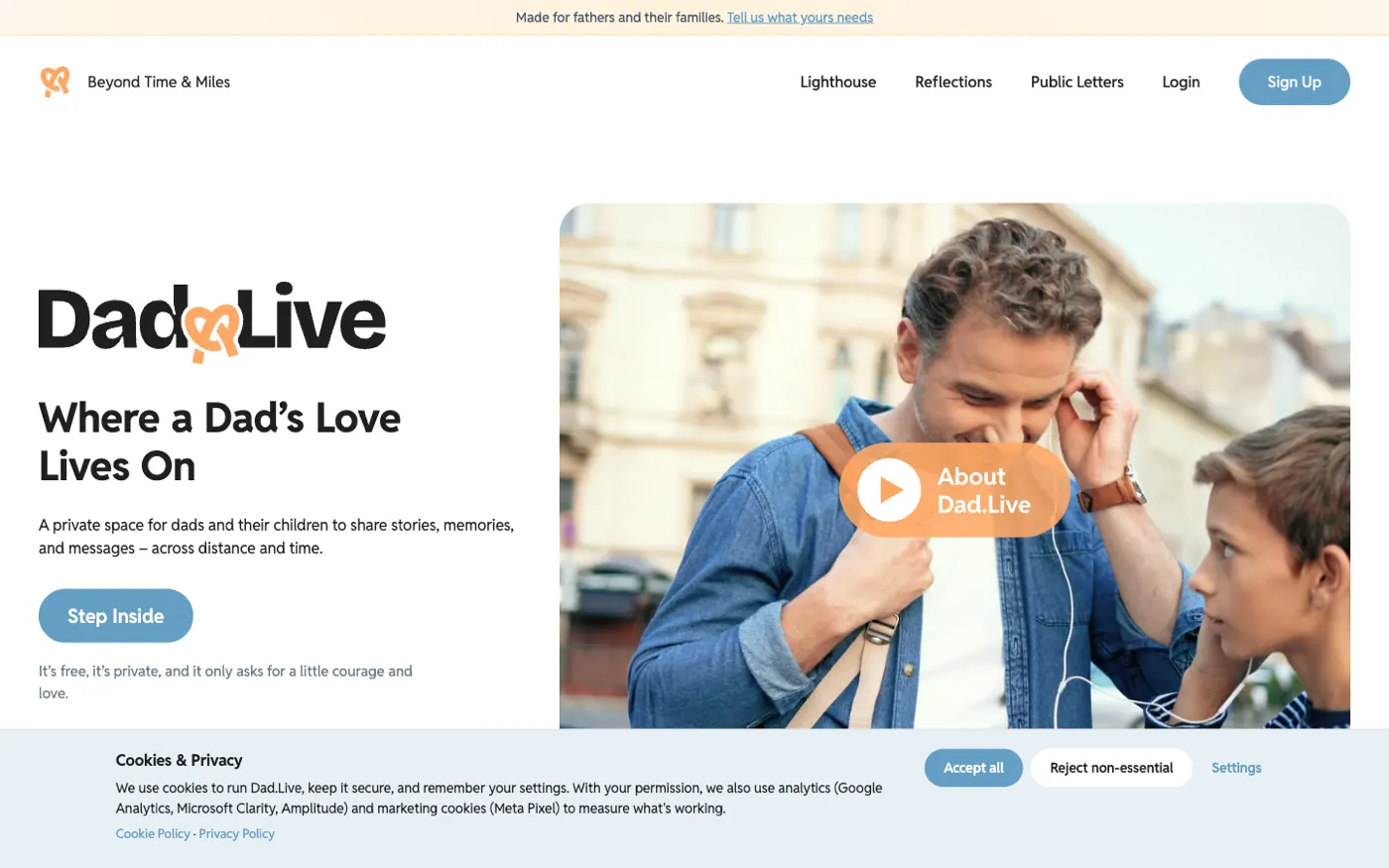
A message a child opens in fifteen years is a different engineering problem from a message opened in fifteen seconds. The product brief translated into unusual technical requirements:
- A layered privacy model — private to one child, shared with the family, or published to the world; nothing defaults to public
- Time-aware delivery — content that unlocks on dates and life moments, with notifications when a dad shares something new
- Mixed media — text, voice and video treated as first-class letters, not attachments
- A discovery engine — surfacing public letters and reflections so the platform is alive for newcomers, not an empty vault
What We Built
The Letter Model and Sharing Flows
Everything on Dad.Live is a letter — written, spoken or filmed. We modelled the full lifecycle: compose, address to a child or the family, choose visibility, schedule or send, notify, respond. Children can comment and post back, because the founders were adamant the platform be a conversation, not a broadcast. It is the kind of product logic our full-stack team enjoys most: no template to copy, just flows to get right.
The Public Letters Feed and Discovery Engine
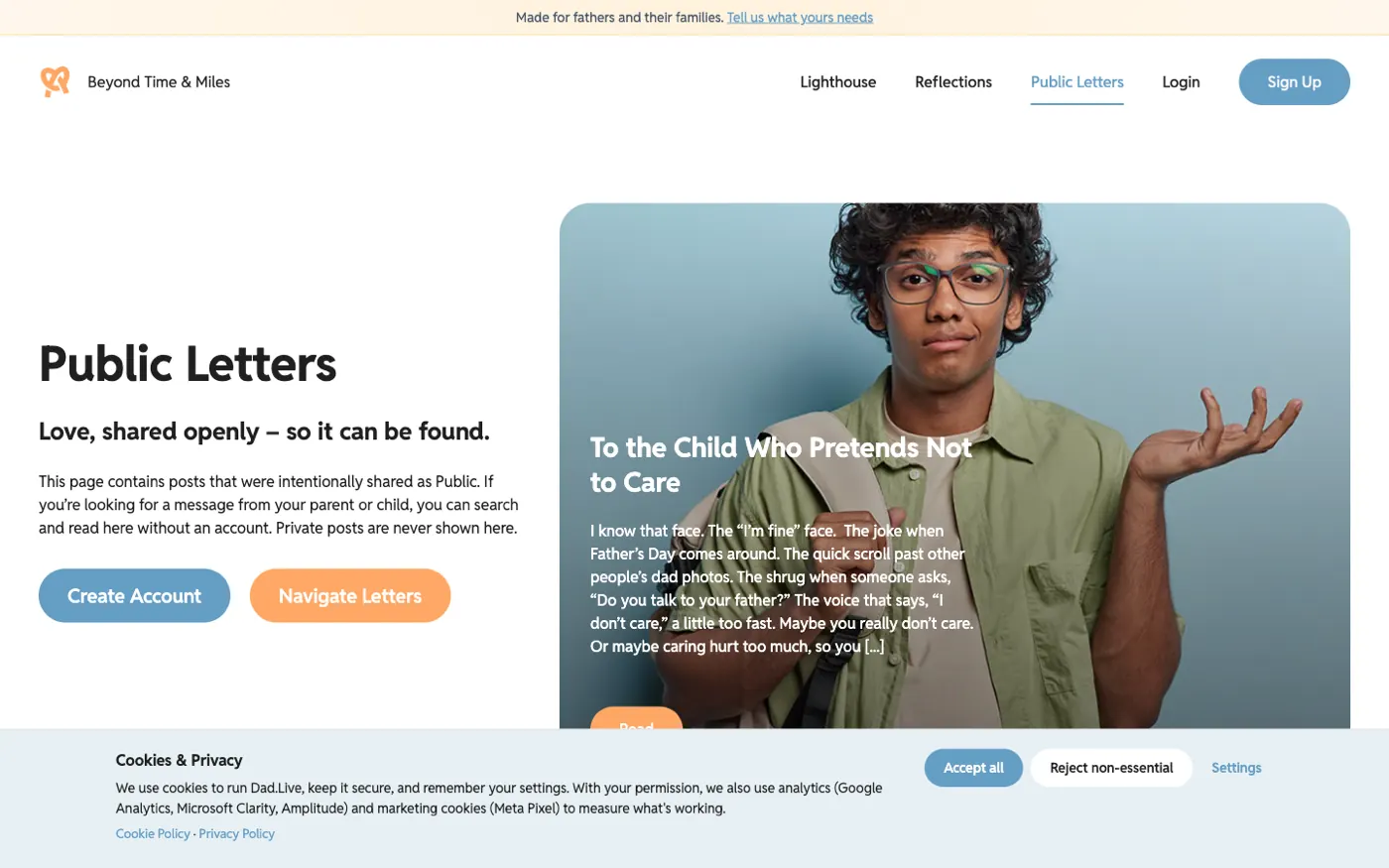
Fathers who choose to publish feed the platform's public face — a stream of letters and reflections that shows newcomers what the product is for better than any landing-page copy could. The discovery engine we built ranks and surfaces this content, giving the site an editorial pulse without an editorial team.
Sign-In and Page-Speed Work
Onboarding uses social sign-in (Apple, Google) so a father's first letter is minutes away, not a registration form away. And because emotional products die on slow pages, we ran the same page-speed discipline we apply to commerce: lean payloads, optimised media delivery and caching tuned for a content-heavy consumer site.
The Technology Stack
- Custom platform engineering — Node.js services behind the letter, sharing and notification flows
- Layered privacy architecture — per-letter visibility from private to public, enforced server-side
- Discovery engine — ranking and surfacing public letters and reflections
- Social authentication — Apple and Google sign-in for near-zero onboarding friction
- Performance layer — media-heavy pages kept fast on ordinary phones
Consumer platforms like this are where custom development differs most from configuration: every decision — what a letter is, who may see it, when it arrives — is product thinking rendered as code.
Building Something Without a Template?
If your product idea doesn't map onto any platform's feature list, that's not a problem — it's a spec. Talk to our engineering team about custom platform builds; we'll come back within a business day with an honest read on scope, sequence and cost.