- Client
- PriceGuru
- Platform
- Magento 2 + Hyvä
- Industry
- Electronics Marketplace
- Scope
- Build + ongoing engineering
- Live site
- priceguru.mu
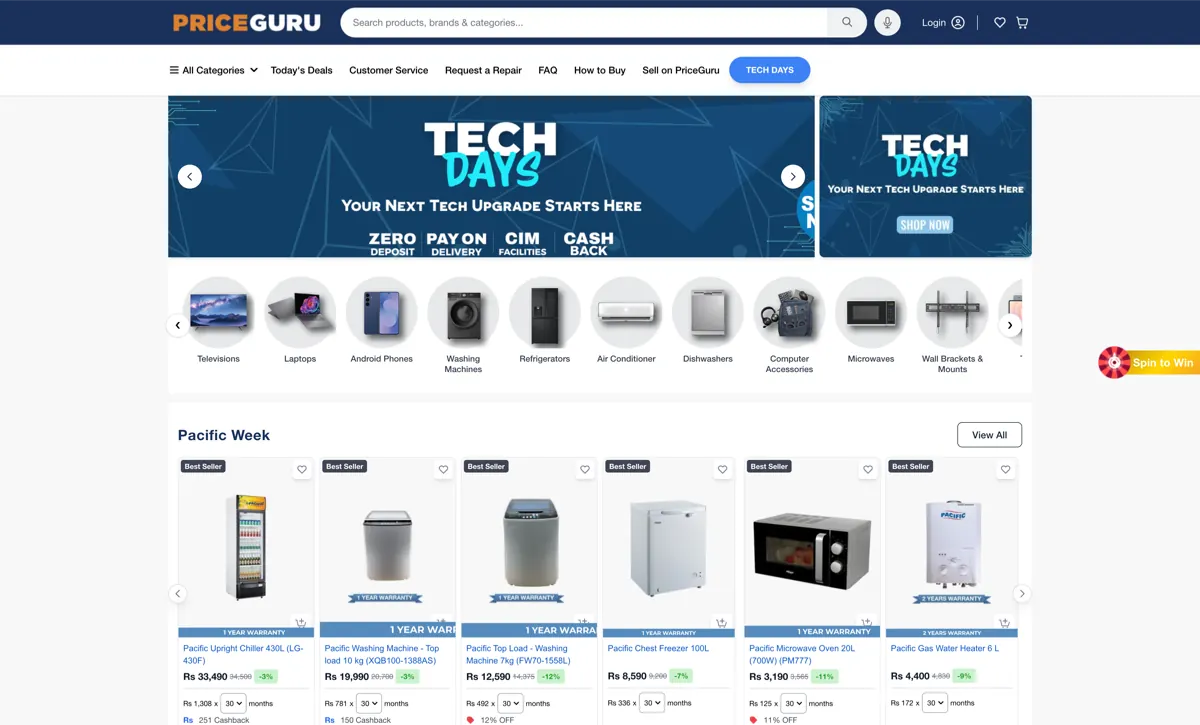
PriceGuru set out to be the place Mauritians check before buying electronics — phones, TVs, laptops, appliances — with honest prices and fast island-wide delivery. Behind that simple promise sits an operation most shoppers never see: supplier feeds, purchase orders, a warehouse, invoicing and a delivery fleet. We have built and run the whole stack, from the storefront pixels to the finance system, in an engagement that has lasted years.
This is the project we point to when someone asks what full-lifecycle eCommerce development actually means: web development from day one, continuous upgrades, and a back office that grew with the business.
The Challenge: A Marketplace That Is Also a Retail Operation
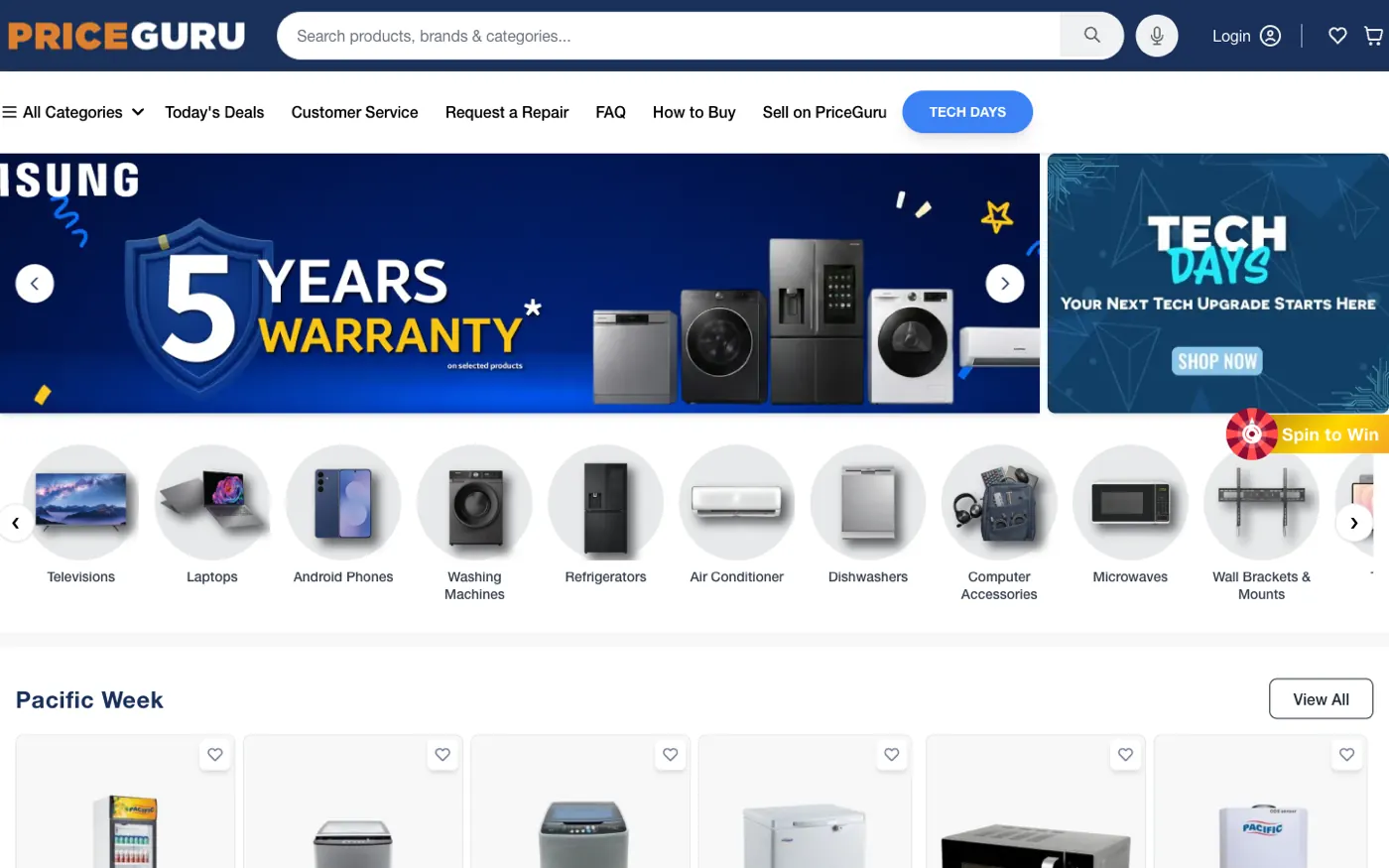
Price-comparison sites are content plays. Retailers are logistics plays. PriceGuru is both — it lists and compares products across brands and suppliers, and it also sells, stocks, invoices and delivers them. That dual nature drove every architectural decision:
- Supplier feeds arrive in different formats and update on different schedules — pricing and stock have to reconcile automatically
- Purchase orders and warehouse stock must stay in lockstep with what the storefront promises
- Invoicing and finance need to close the loop from cart to ledger without manual re-entry
- Delivery management has to route real drivers to real addresses across Mauritius
What We Built
The Storefront: Magento 2 on Hyvä
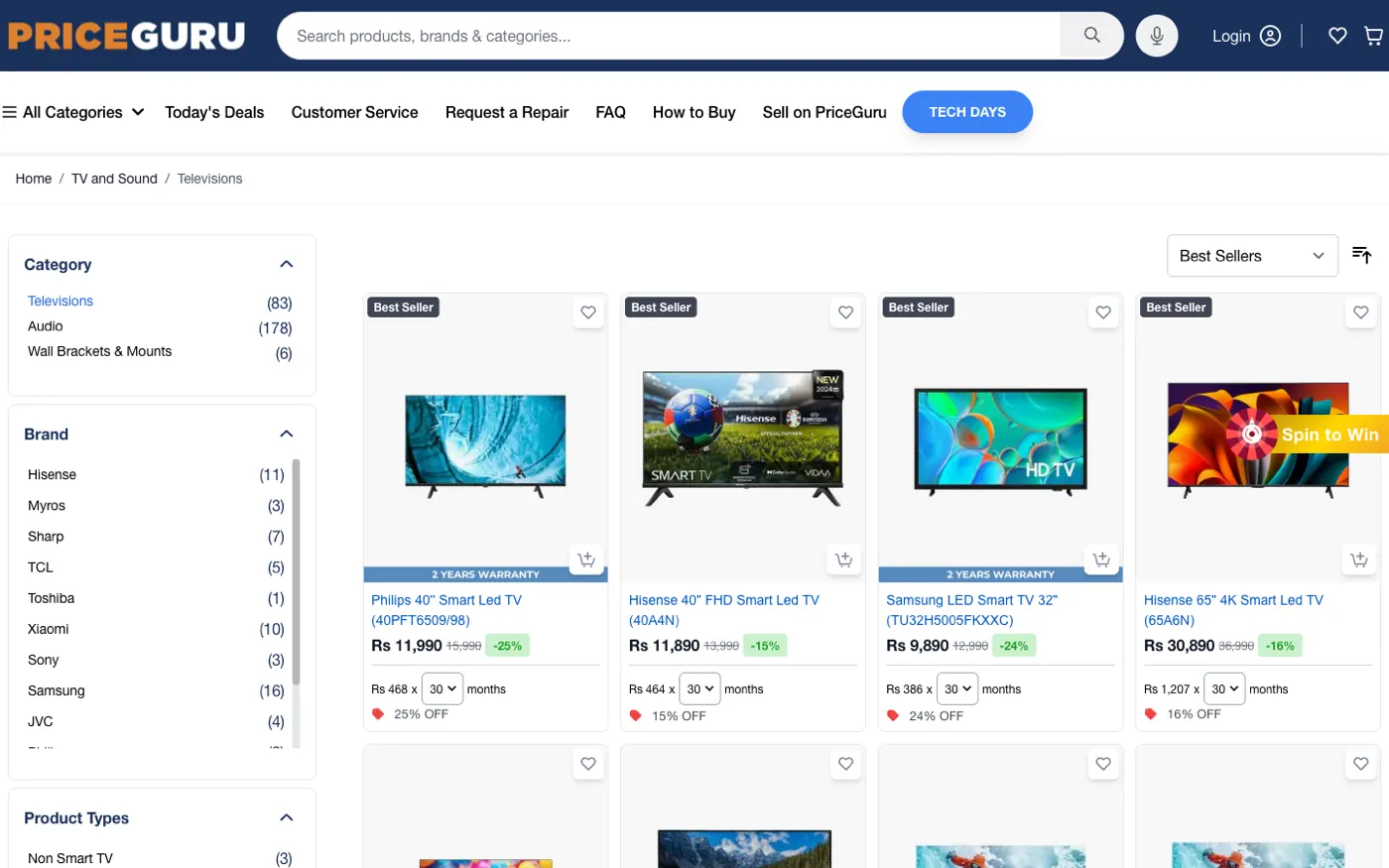
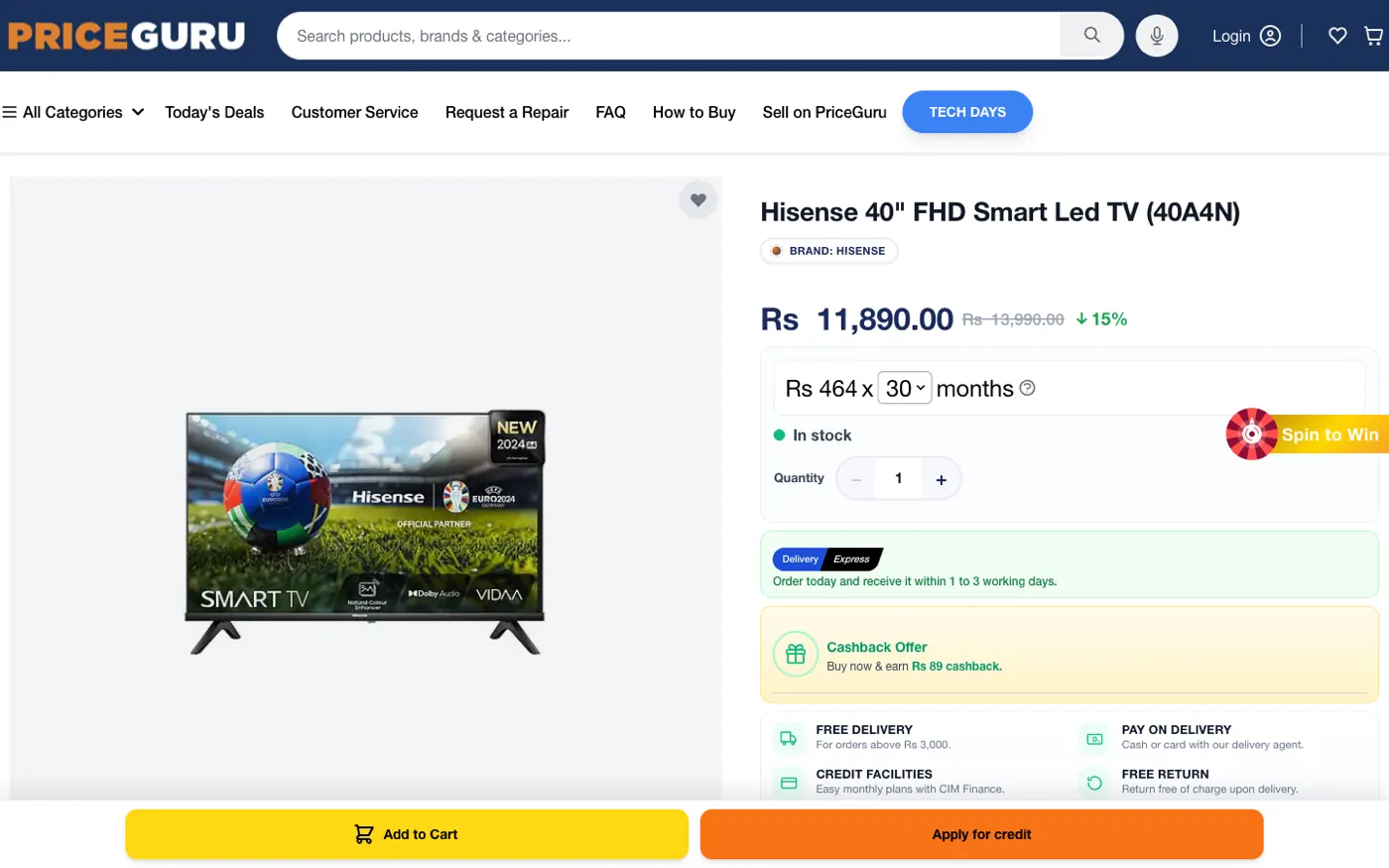
The shopper-facing store runs Magento 2 with a Hyvä front end — Tailwind CSS styling, Alpine.js behaviour, and a fraction of the JavaScript a stock Luma theme ships. On a catalogue this deep (thousands of SKUs across dozens of categories), keeping category and search pages fast on mobile is the difference between a bounce and a basket.
A One-Page Checkout Built for Island Logistics
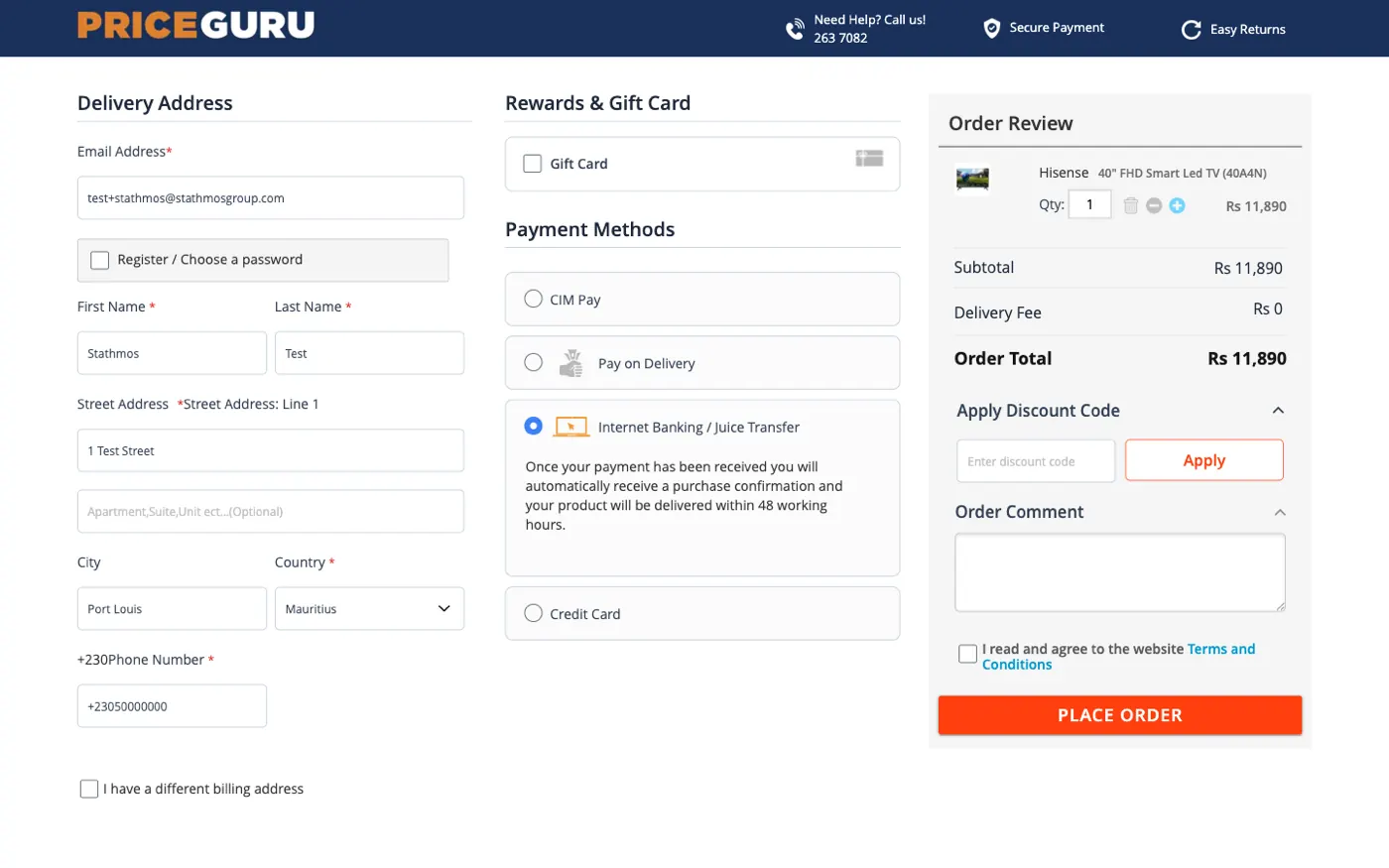
Checkout is a single page: address, payment method (bank transfer, card, pay-on-delivery) and order review side by side. Fewer steps means fewer abandoned carts — and the payment mix reflects how Mauritians actually pay, not how a default checkout assumes they do.
The Back Office: Finance, Warehouse, POs and Delivery
The storefront is the visible third of the system. Behind it we built, piece by piece as the business scaled:
- Supplier-feed integration — third-party price and stock feeds normalised into one catalogue
- Finance and invoicing — order-to-invoice automation that keeps the ledger honest
- Warehouse management — stock positions that match what the site sells
- Purchase-order management — replenishment driven by actual sell-through
- Delivery management — dispatch and tracking for the island-wide fleet
None of this shipped as one big-bang project. It accreted over years of continuous engagement — which is exactly how operational software should be built: against real invoices, real stock counts and real delivery runs.
AI-Powered Recommendations
Most recently we added an AI recommendation engine that suggests products from browsing and purchase behaviour — the kind of practical, revenue-focused AI and ML integration we favour over science projects. It slots into the existing storefront rather than replacing it, the pattern behind most of our applied-AI work.
The Technology Stack
- Magento 2 — catalogue, promotions and checkout for a multi-thousand-SKU electronics range
- Hyvä theme — Tailwind CSS + Alpine.js storefront with a minimal JS payload
- Custom back-office services — finance, warehouse, PO and delivery modules integrated with the store
- Supplier-feed pipelines — automated normalisation of third-party price/stock data
- AI recommendation engine — behaviour-driven product suggestions
The lesson we keep re-learning on PriceGuru: the platform choice matters less than the discipline around it. Magento gave us an extensible core; the value came from years of steady retail-commerce engineering on top of it.
Running a Store That's Really an Operation?
If your commerce platform has outgrown its admin panel — feeds you reconcile by hand, invoices you re-type, stock that drifts — that is not a plugin problem, it is a systems problem. Talk to our engineering team: we'll map what you have and give you an honest read on what to build next, usually within a business day.