- Client
- Scout Arabia
- Platform
- Magento 2 + Hyvä
- Industry
- Handcrafted Gifts Marketplace
- Scope
- Full build from scratch
- Live site
- scoutarabia.com
Scout is a premium gifting marketplace for Jordan and the GCC with a clear mission: give Arab artisans and independent local brands a storefront that feels as considered as the products they make. That mission carried three hard technical requirements — true multi-vendor commerce, a fully bilingual Arabic/English experience, and a storefront fast enough to feel premium on a mid-range phone.
In our build for Scout we delivered all three on Magento 2, from scratch — catalogue architecture, seller operations, both language storefronts and the mobile APIs behind them.
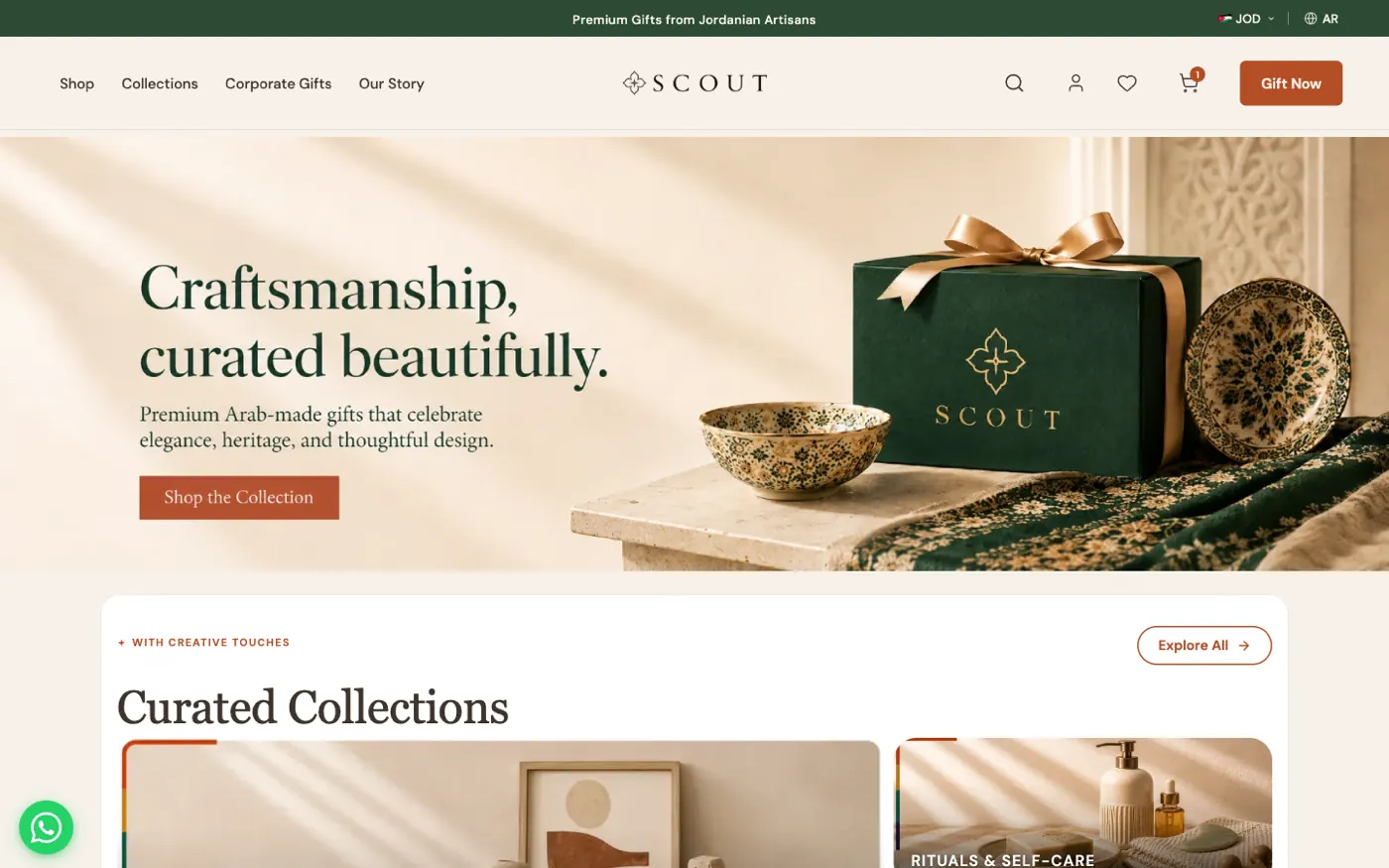
The Challenge: One Premium Brand, Many Independent Sellers
A marketplace is not a big webshop. Every seller needs their own catalogue, their own fulfilment view and their own promotions — while the shopper sees one coherent brand, one cart and one checkout. Off-the-shelf Magento is single-merchant; the multi-vendor layer had to be engineered deliberately.
- Dozens of artisan sellers, each with an independent product catalogue and inventory
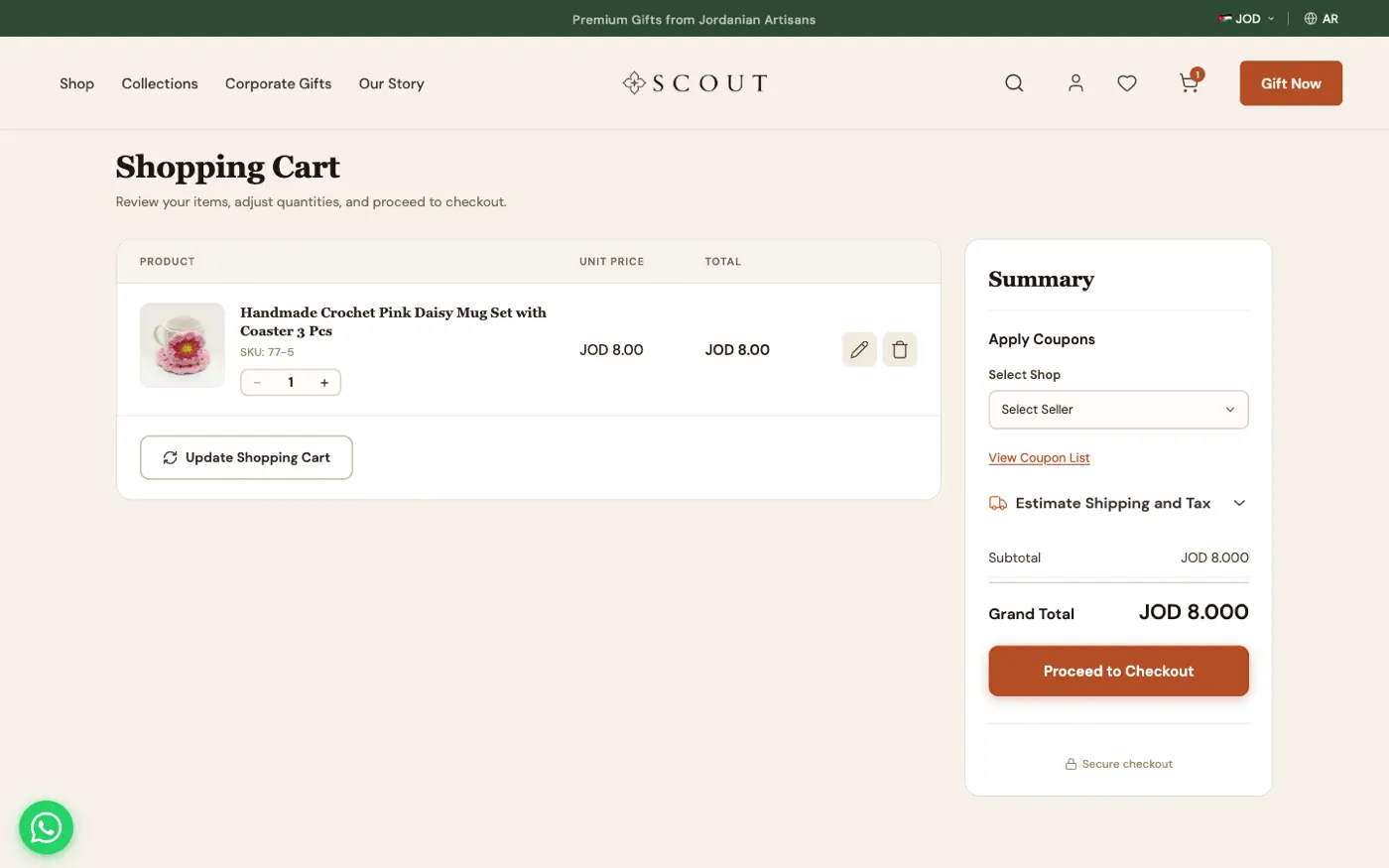
- Seller-scoped promotions — the checkout lets a shopper apply coupons per shop, not per order
- Curated, occasion-led merchandising (Ramadan, Eid, weddings, corporate gifting) layered over the seller catalogues
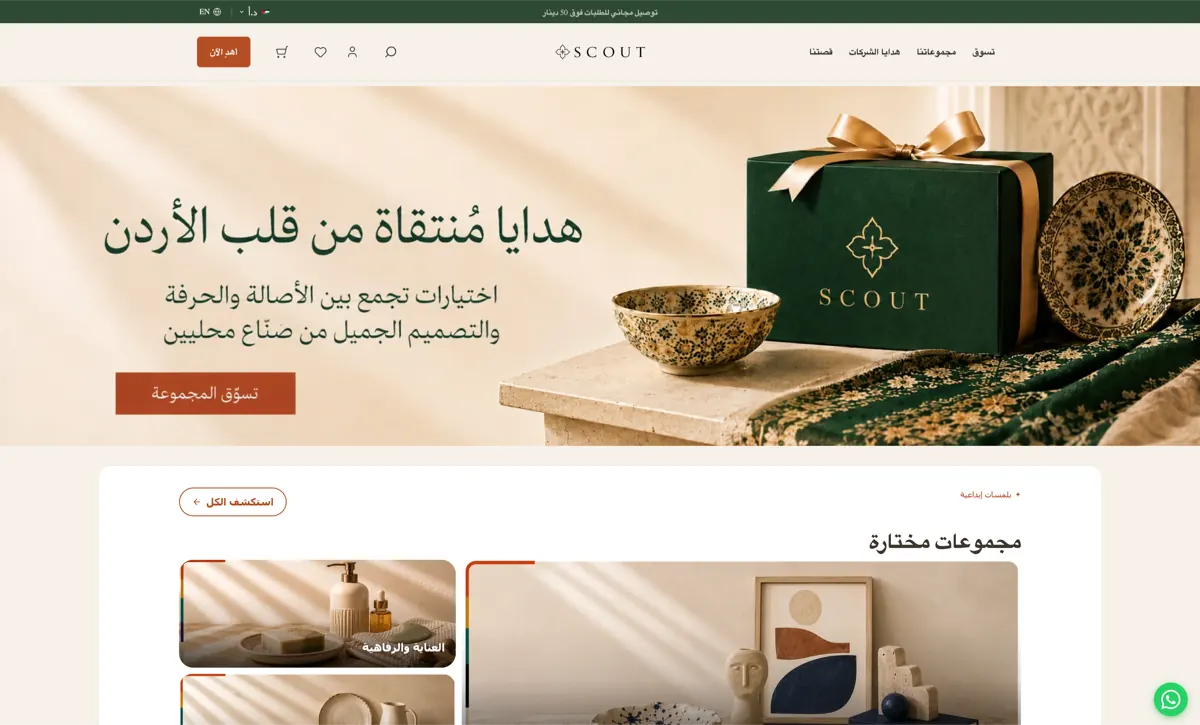
- Arabic-first audience: the AR storefront is the default, not a translation bolted on afterwards
What We Built
Multi-Vendor Architecture on Magento 2
We modelled sellers as first-class citizens in the catalogue: every product belongs to a shop, every shop has its own operational workflows, and cross-seller rules (commissions, per-seller coupons, fulfilment splits) are enforced server-side. The result is eCommerce development that scales by onboarding a seller, not by rebuilding the store.
A Bilingual, RTL-First Storefront
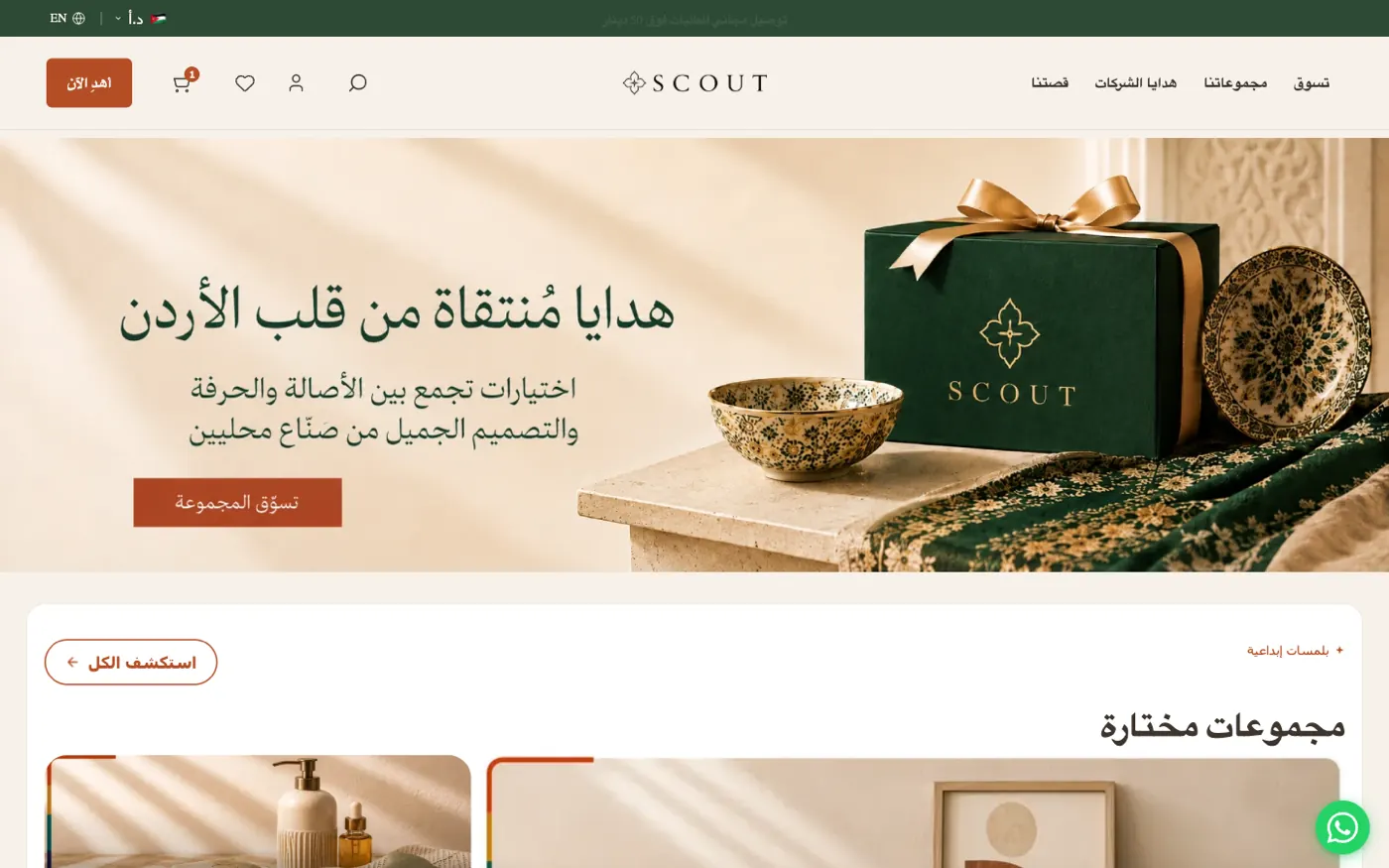
Arabic is not a translation file — it is a full right-to-left storefront with its own typography, mirrored layouts and localised merchandising. We run English and Arabic as parallel Magento store views over one catalogue, so content teams manage products once and both experiences stay in sync.
Commerce UX That Sells Craft
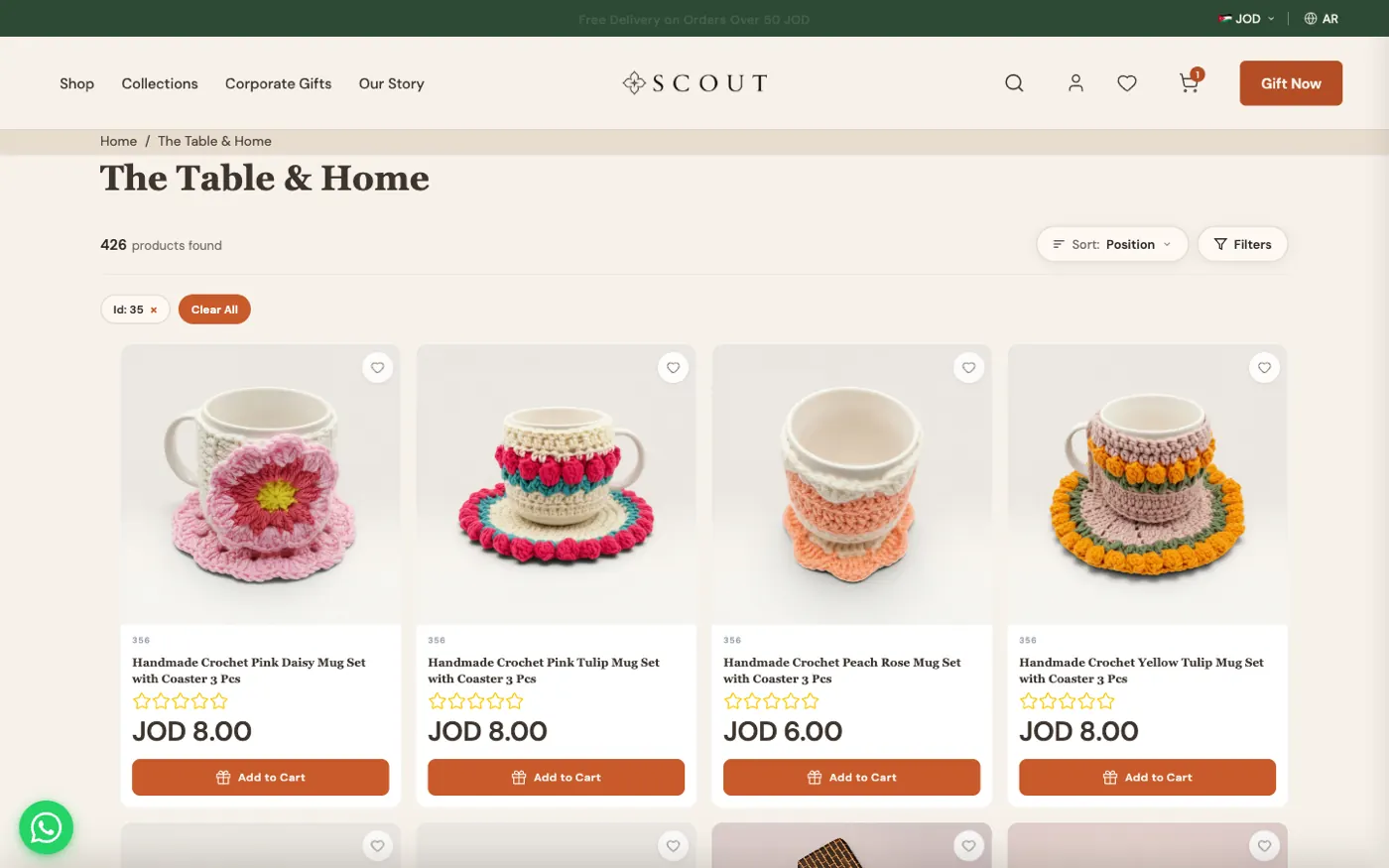
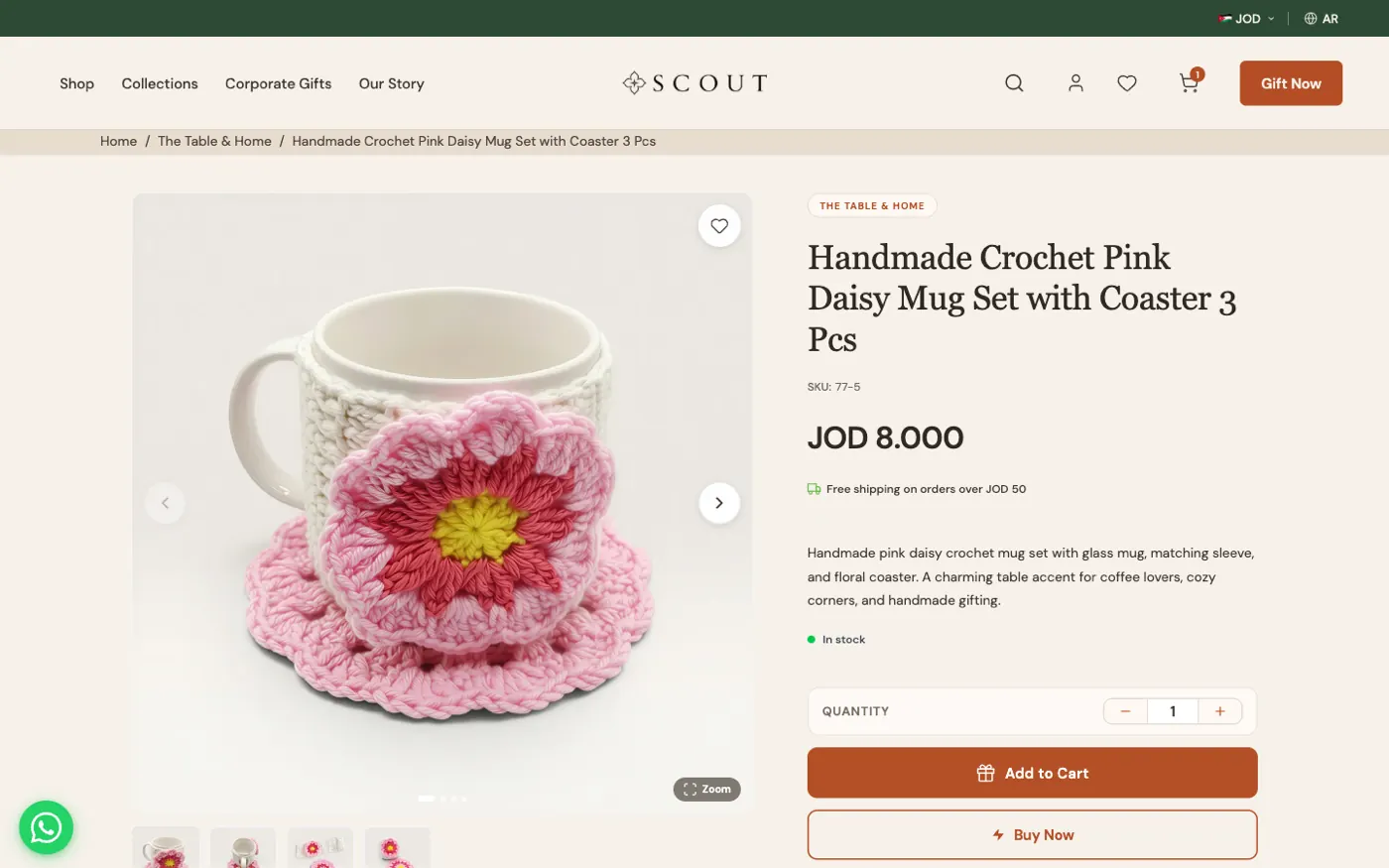
Handmade products need context to justify their price. Category and product templates lead with photography, maker stories and gifting occasions — closer to an editorial page than a data sheet — while staying fully server-rendered for SEO.
Mobile APIs
The storefront exposes clean APIs for cart, catalogue and checkout, built for the mobile commerce journeys that dominate Gulf shopping traffic — the same backend serves web and app-style clients without duplicated business logic.
The Technology Stack: Magento 2 + Hyvä
The storefront runs on Hyvä, the modern Magento theme that replaces the legacy Luma front end with Tailwind CSS utility styling and Alpine.js behaviour. In practice that means the browser downloads a fraction of the JavaScript a stock Magento store ships — which is precisely the kind of work we obsess over in our page speed optimisation practice.
- Magento 2 — catalogue, promotions, multi-store, checkout: proven open-source commerce with no per-seller licensing
- Hyvä theme — Tailwind + Alpine.js storefront; minimal JS payload, server-rendered HTML
- Parallel store views — English and Arabic (RTL) over one catalogue
- Custom multi-vendor layer — seller-scoped catalogues, coupons and operations
Why Magento for a marketplace? Because the alternative — SaaS platforms — price and permission per merchant. On Magento, adding your fortieth seller costs the same as your fourth. That maths matters for a marketplace business model.
The Cart and Checkout
Checkout is where multi-vendor complexity concentrates: one payment, many sellers, seller-level coupons. We kept the shopper-facing flow deliberately simple and pushed the complexity server-side, where it belongs.
What This Kind of Build Looks Like for You
Marketplace projects fail when the multi-vendor layer is treated as a plugin instead of an architecture. In our experience the decisions that matter — seller data model, store-view strategy, where promotions execute — have to be made before the first template is styled. That is the discipline we bring to every retail commerce build, and increasingly we pair it with the discovery and recommendation layers from our AI practice as marketplaces grow.
Planning a marketplace, or wrestling a single-merchant store toward multi-vendor? Talk to our engineering team — we'll give you an honest read on scope, sequence and cost within a business day.